What's Ju-Jutsu?
German Ju-Jutsu is one of the most diverse and versatile martial arts, combining self-defense, competition and popular sport. It is primarily made up of elements of judo, aikido and karate to form a complete system of striking, locks, throwing and ground techniques.
The modern Ju-Jutsu of the German Ju-Jutsu Association (DJJV) was founded in 1969 to modernize the existing personal & LEO self-defence systems. In 2000 and 2023, the system was revised again to update it and incorporate new influences from boxing, Thai boxing, Filipino martial arts (FMA) and Brazilian Jiu-Jitsu (BJJ).
Due to the wide variety of possibilities, influences and purposes, Ju-Jutsu can differ from club to club and even from trainer to trainer.
At TV Cannstatt, we focus primarily on popular sports, technique training and the associated belt examinations, but we also regularly incorporate self-defense techniques into our training.
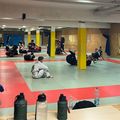
Training
| Pattrick Senk | Trainer-C Ju-Jutsu |
| 4. Dan Ju-Jutsu | |
| Felix Mörgenthaler | Trainer-C Ju-Jutsu |
| 1. Dan Ju-Jutsu | |
| 1. Dan Jiu-Jitsu | |
| 1. Kyu Judo | |
| Alexander Olshansky | 1. Dan Ju-Jutsu |
Das Deutsche Ju-Jutsu ist eine der vielfältigsten und vielseitigsten Kampfkünste, die Selbstverteidigung, Wettkampf und Breitensport kombiniert. Dabei setzt es sich vor allem aus Elementen des Judo, Aikido und Karate zusammen um ein vollständiges System aus Schlag-, Hebel-, Wurf- und Bodentechniken zu bilden.
Das moderne Ju-Jutsu des Deutschen Ju-Jutsu Verbands (DJJV) wurde 1969 gegründet, um die bisher existierenden Selbstverteidigungs- und Behördensysteme zu modernisieren. Im Jahr 2000 und 2023 wurde das System noch einmal überarbeitet, um es zu aktualisieren und neue Einflüsse aus Boxen, Thaiboxen, den philippinischen Kampfkünsten (FMA) sowie Brazilian Jiu-Jitsu (BJJ) aufzunehmen.
Durch die große Vielfalt an Möglichkeiten, Einflüssen und Einsatzzwecken kann sich Ju-Jutsu von Verein zu Verein und sogar von Trainer zu Trainer unterscheiden.
Im TV Cannstatt fokussieren wir uns vor allem auf Breitensport, Techniktraining und den damit einhergehenden Gürtelprüfungen, aber lassen auch regelmäßig Techniken aus dem Selbstverteidigungsbereich ins Training einfließen.
Wie trainieren wir?
Unser Training hat den bei vielen Kampfsportarten üblichen Ablauf: Nach einem Aufwärmtraining mit sportartspezifischen Übungen wie Fallübungen gibt es ein Techniktraining, das in der Regel durch ein Training in der freien Selbstverteidigung, Randori (der freien Auseinandersetzung) oder Kraftausdauertraining abgeschlossen wird.
Der Technikteil des Ju-Jutsu besteht aus vielen Elementen:
- Schlagtechniken (mit den Händen, Ellbogen, Knien und Füßen)
- Abwehrtechniken
- Hebeltechniken
- Wurftechniken
- Bodentechniken
- Abwehrtechniken gegen Stock und Messer
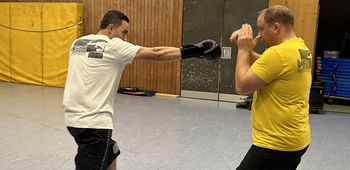
Die Techniken werden separat gelernt und in Technikkombinationen, an Pratzen oder im Randori austrainiert.
Wer trainiert bei uns?
Bei uns sind alle willkommen, die älter als 8 Jahre (Kindertraining) bzw. 16 Jahre (Erwachsenentraining) sind und rücksichtsvoll mit Anderen umgehen.
Für uns ist es am Wichtigsten, Spaß am Ju-Jutsu zu haben, deshalb trainieren wir ernsthaft und schweißtreibend, aber immer mit Rücksicht gegenüber den Trainingspartnern und mit Spaß am Ganzen.
Kann man bei euch Gürtelprüfungen ablegen?
Ja es werden in der Regel jährlich Prüfungen vorbereitet und abgelegt.
Wie hoch ist die Verletzungsgefahr?
Die Verletzungsgefahr ist deutlich geringer als z. B. bei Fußball oder Volleyball (Knochenbrüche & Bänderrisse).
Durch das respektvolle Miteinander sind Verletzungen sehr selten.
Gibt es eigentlich Trainingsregeln?
Die Trainingsregeln fußen auf der allgemeinen Budo-Etikette, wie sie in japanischen Kampfkünsten beachtet werden:
- Korrekte Trainingskleider: Keine Straßenschuhe im Dojo, sauberer Gi
- Saubere Hände und Füße, kurzgeschnittene Finger- und Fußnägel
- Armbänder, Kettchen, Uhr, Ringe etc. ablegen
- Jugendliche 17-18 Jahre
- Erwachsene
Trainingszeiten
70376 Stuttgart
70376 Stuttgart
If you are older than 15 years and would like to come to our training, please contact us using the form below or at jj(@)ju-jutsu-tvc.de!
If you are younger, have a look at our Kids page!
It’s best to wear tight-fitting clothing without zippers when training.
We train barefoot, but be sure to bring you slippers/flip flops so that you don’t walk around without shoes outside the mat.
JiuJitsu is a full contact sport, take care of your personal hygiene and train in clean clothes.
Short fingernails and toenails are important so that you do not injure yourself or others, so please remove jewelry/earrings/piercings before training.
If you are injured or feel unwell, always speak to the person giving the training, we are here to answer any questions.
Anyway, have fun and come by a few times before you decide on us :)
Our training follows the usual sequence for many martial arts: After a warm-up training with sport-specific exercises such as falling exercises, there is a technique training, which is usually concluded by training in free self-defense, randori (sparring) or strength endurance training.
The technical part of Ju-Jutsu consists of many elements:
- Striking techniques (with the hands, elbows, knees and feet)
- Defense techniques against strikes & grappling attacks
- Locks techniques
- Throws
- Ground techniques
- Defense against sticks and knives
The techniques are learned separately and practiced in technique combinations, on pads or in randori.
We welcome everyone who is older than 16 years and is considerate of others.
The most important thing for us is to have fun with Ju-Jutsu, which is why we train seriously and sweatily, but always with consideration for our training partners and with fun in mind.
Yes, examinations are usually prepared and taken annually.
The risk of injury is significantly lower than in soccer or volleyball, for example (broken bones and torn ligaments).
Due to the respectful interaction, injuries are very rare.
The training rules are based on general Budo etiquette as observed in Japanese martial arts:
- Proper training attire: no street shoes in the dojo, clean gi
- Clean hands and feet, short-cut fingernails and toenails
- Remove bracelets, chains, watches, rings etc.
More information about Ju-Jutsu can be found on the websites of the
Simply fill in the form above and register for a trial training session!
The yearly costs for membership in the Ju-Jutsu / BJJ / FMA department are divided into two parts:
The fee for the main club and the fee for the department itself.
Prices as of 01.01.2026
| Who | Club* | Division* | Both* |
| Children, students, apprentices | 87€ | 20€ | 107€ |
| Retired, unemployed, severely disabled | 99€ | 25€ | 124€ |
| FSJ, BFD | 30€ | 25€ | 55€ |
| Adults | 148€ | 25€ | 173€ |
| Adult with children | 207€ | 25€ p.p. | depends |
| Married couple, cohabiting couple | 224€ | 25€ p.p. | depends |
| Family with children | 243€ | 25€ p.p. | depends |
1. Online Registration (recommended)
Since 2026, membership registration is primarily handled through our digital contract system.
This ensures faster processing by our administration.
Start your online registration here: https://vertrag.buchungscloud.de/tv-cannstatt
New Member
If you are new to TV Cannstatt 1846 e.V., please first select a suitable main club membership.
Already a Member?
If you are already a member of TV Cannstatt 1846 e.V., you do not need to select a new main club membership.
Please enter your customer number in the “Remarks” field during registration.
This allows us to assign your department membership correctly.
2. Selecting the Department Fee
The department
Ju-Jutsu – Brazilian Jiu-Jitsu – Filipino Martial Arts
includes the following training areas:
- Brazilian Jiu-Jitsu
- Doce Pares Eskrima
- Ju-Jutsu
- Ju-Jutsu Kids
- Kali Silat Evolution
In the online contract system, these disciplines are not listed separately.
Please select the department fee:
“Ju-Jutsu”
This fee applies to all disciplines listed above.
3. PDF Registration (optional)
If you prefer not to register online, you may use the PDF contract form instead.
Please send the completed form to:
info@tvcannstatt.de
or submit it to our administration office:
TV Cannstatt – Office
Am Schnarrenberg 5
70376 Stuttgart
Germany
Phone: +49 711 52 08 94 60
Office hours:
Monday: 9:00–13:00 & 14:00–17:00
Wednesday: 9:00–13:00
Thursday: 9:00–13:00 & 14:00–17:00
4. Contact the Department
Please make sure you have contacted the department before completing your registration.
Montag

Dienstag
Mittwoch
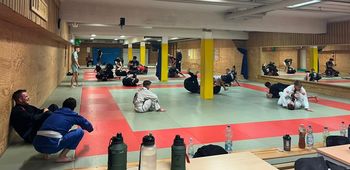
Brazilian Jiu-Jitsu - Training (Gi)
Was ist Brazilian Jiu Jitsu (BJJ)
Wie Judo, Ringen & Sambo ist BJJ ein Grappling-Stil.
BJJ unterscheidet sich durch seinen starken Fokus auf die Bodenarbeit, bei dem das ultimative Ziel darin besteht, den Gegner mithilfe von Hebel- und Würgetechniken zum Abschlagen („Tappen“) zu bringen.
Teilweise wird BJJ wie im Judo in einer Jacke und einer Hose, die als „Gi“ bezeichnet werden, trainiert.
Genauso kann man BJJ auch wie beim Ringen ohne Gi („no-gi“) trainieren – anstelle einer Gi-Uniform trägt man Shorts, T-Shirts oder Kompressionskleidung wie Rashguards.
Kostenloses Probetraining
Trage beim Training am Besten enganliegende Kleidung ohne Reißverschlüsse.
Wir trainieren Barfuß, bringe dir aber unbedingt Slipper/Flip Flops, damit du außerhalb der Matte nicht ohne Schuhe rumläufst.
JiuJitsu ist ein Vollkontaktsport, achte auf deine Körperpflege und trainiere in sauberer Kleidung.
Kurze Finger- und Fußnägel sind wichtig, damit man sich und Andere nicht verletzt, deshalb bitte auch Schmuck/Ohrringe/Piercings vor dem Training entfernen.
Falls du verletzt bist oder dich unwohl fühlst, sprich immer die Person an, die das Training gibt, wir sind für Fragen da.
Ansonsten hab Spaß und komm gerne ein paar Mal vorbei, bevor du dich für uns entscheidest :)


Florian „Cziczi“ Czieslik
Trainer

Michael Hernandez
Trainer
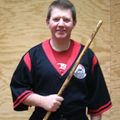
Doce Pares Eskrima
Ju-Jutsu
Das Deutsche Ju-Jutsu ist eine der vielfältigsten und vielseitigsten Kampfkünste, die Selbstverteidigung, Wettkampf und Breitensport kombiniert. Dabei setzt es sich vor allem aus Elementen des Judo, Aikido und Karate zusammen um ein vollständiges System aus Schlag-, Hebel-, Wurf- und Bodentechniken zu bilden.
Das moderne Ju-Jutsu des Deutschen Ju-Jutsu Verbands (DJJV) wurde 1969 gegründet, um die bisher existierenden Selbstverteidigungs- und Behördensysteme zu modernisieren. Im Jahr 2000 und 2023 wurde das System noch einmal überarbeitet, um es zu aktualisieren und neue Einflüsse aus Boxen, Thaiboxen, den philippinischen Kampfkünsten (FMA) sowie Brazilian Jiu-Jitsu (BJJ) aufzunehmen.
Durch die große Vielfalt an Möglichkeiten, Einflüssen und Einsatzzwecken kann sich Ju-Jutsu von Verein zu Verein und sogar von Trainer zu Trainer unterscheiden.
Im TV Cannstatt fokussieren wir uns vor allem auf Breitensport, Techniktraining und den damit einhergehenden Gürtelprüfungen, aber lassen auch regelmäßig Techniken aus dem Selbstverteidigungsbereich ins Training einfließen.
Wie trainieren wir?
Unser Training hat den bei vielen Kampfsportarten üblichen Ablauf: Nach einem Aufwärmtraining mit sportartspezifischen Übungen wie Fallübungen gibt es ein Techniktraining, das in der Regel durch ein Training in der freien Selbstverteidigung, Randori (der freien Auseinandersetzung) oder Kraftausdauertraining abgeschlossen wird.
Der Technikteil des Ju-Jutsu besteht aus vielen Elementen:
- Schlagtechniken (mit den Händen, Ellbogen, Knien und Füßen)
- Abwehrtechniken
- Hebeltechniken
- Wurftechniken
- Bodentechniken
- Abwehrtechniken gegen Stock und Messer
Die Techniken werden separat gelernt und in Technikkombinationen, an Pratzen oder im Randori austrainiert.
Wer trainiert bei uns?
Bei uns sind alle willkommen, die älter als 8 Jahre (Kindertraining) bzw. 16 Jahre (Erwachsenentraining) sind und rücksichtsvoll mit Anderen umgehen.
Für uns ist es am Wichtigsten, Spaß am Ju-Jutsu zu haben, deshalb trainieren wir ernsthaft und schweißtreibend, aber immer mit Rücksicht gegenüber den Trainingspartnern und mit Spaß am Ganzen.
Kann man bei euch Gürtelprüfungen ablegen?
Ja es werden in der Regel jährlich Prüfungen vorbereitet und abgelegt.
Wie hoch ist die Verletzungsgefahr?
Die Verletzungsgefahr ist deutlich geringer als z. B. bei Fußball oder Volleyball (Knochenbrüche & Bänderrisse).
Durch das respektvolle Miteinander sind Verletzungen sehr selten.
Gibt es eigentlich Trainingsregeln?
Die Trainingsregeln fußen auf der allgemeinen Budo-Etikette, wie sie in japanischen Kampfkünsten beachtet werden:
- Korrekte Trainingskleider: Keine Straßenschuhe im Dojo, sauberer Gi
- Saubere Hände und Füße, kurzgeschnittene Finger- und Fußnägel
- Armbänder, Kettchen, Uhr, Ringe etc. ablegen
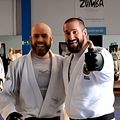
Kali Silat Evolution
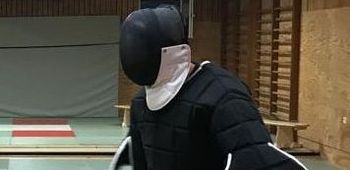
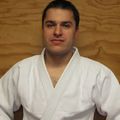
Kali Silat Evolution (KSE) ist eine moderne & dynamische Kampfkunst, die südostasiatische Kampfkünste und westliche Kampfsportarten fusioniert.
Es kombiniert hierbei Konzepte, Methoden und Techniken aus den FMA (Filipino Martial Arts), Pencak Silat, Muay Boran sowie westliches Boxen und französisches Savate.
KSE ist aus dem Kali Sikaran entstanden und beinhaltet wie die meisten südostasiatischen Kampfkünste diverse Waffen, aber trainiert im gleichen Maße den waffenlosen Kampf.
Was beinhaltet KSE?
KSE besteht aus diversen Subsystem, welche miteinander verwoben sind und dazu führen, dass jegliches Training in einem Teilbereich die anderen Bereiche verbessert.
– Philippinisches sowie westliches Boxen & Kickboxen
– Stockkampf (mit einem sowie zwei Stöcken)
– Messerkampf
– Schwert & Messer (‘Espada y daga’)
– Kadena de Mano (Anwendung von Waffentechniken ohne Waffen)
– Indonesisches Silat
Für wen ist KSE geeignet?
KSE ist für Jeden geeignet, egal ob mit oder ohne voriger Kampfkunsterfahrung. Aber durch seinen Anspruch den Trainierenden einen individuellen Weg zu ermöglichen ist es ideal geeignet als Ergänzung für erfahrene Kampfsportler, die ihren Horizont erweitern wollen.

Ju-Jutsu Kids
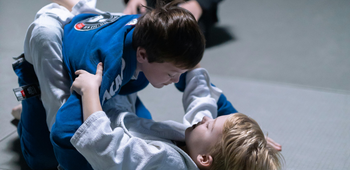
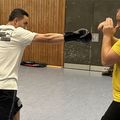
Im Kinder- und Jugendtraining vermitteln wir die Grundlagen der unterschiedlichen Ju-Jutsu-Bereiche, wie Falltechniken, Bewegungsformen, Verteidigungstechniken etc.
Wir machen kein reines Techniktraining, sondern legen großen Wert auf freie Übungsformen im Stand und Boden (Rangeln und Raufen bzw. „Randori“). Neben Phasen des konzentrierten Übens haben die Kids so immer die Möglichkeit, sich ordentlich auszutoben. Wichtig ist uns dabei auch, allgemeine sportliche Fähigkeiten wie Koordination, Kraft und Ausdauer aufzubauen. In regelmäßigen Abständen bieten wir Gürtelprüfungen an.
Da Ju-Jutsu sich als eine Kampfsportart versteht, die teilweise auch zur Selbstverteidigung eingesetzt werden kann, fließen in unser Kinder- und Jugendtraining zudem Inhalte aus dem DJJV-Konzept „Nicht Mit Mir!“ ein (Gewaltprävention, Selbstbehauptung und Selbstverteidigung für Kinder und Jugendliche). Dabei legen wir großen Wert darauf, einen verantwortungsbewussten Umgang mit den erlernten Techniken zu vermitteln.
Innerhalb des Trainings teilen wir die Teilnehmer oft in eine Kindergruppe (ab ca. 8 Jahren) und eine Jugendgruppe (ab ca. 12 Jahren) auf, um altersgerecht trainieren zu können.
Und natürlich darf bei all dem der Spaß nicht zu kurz kommen!
Probetraining
Interessierte Kinder und Jugendliche können nach Absprache gerne „reinschnuppern“. Für das Probetraining reicht bequeme Sportkleidung, Vorkenntnisse sind nicht nötig.
Sicherheit und Hygiene auf der Matte
Um Verletzungen zu vermeiden, tragen wir auf der Matte keinen Schmuck und keine Haargummis oder -spangen mit Metall. Wir trainieren barfuß und mit kurzgeschnittenen Nägeln. Wir betreten die Matte gewaschen und mit sauberer Kleidung.
Bekleidung
Auf Dauer wird ein Trainingsanzug (Gi) benötigt. Dabei ist es egal, ob es sich um einen Ju-Jutsu-Gi, einen Judoanzug oder Ähnliches handelt. Die Anzüge sind in Sportgeschäften oder auch online erhältlich. Manchmal haben wir im Verein auch gebrauchte Gis zum Verkauf. Sprechen Sie uns gegebenenfalls einfach an.
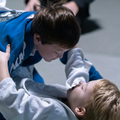

Georg Aslanidis
Trainer
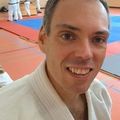
Christopher Kress
Trainer
Brazilian Jiu-Jitsu - Training (Gi)
Was ist Brazilian Jiu Jitsu (BJJ)
Wie Judo, Ringen & Sambo ist BJJ ein Grappling-Stil.
BJJ unterscheidet sich durch seinen starken Fokus auf die Bodenarbeit, bei dem das ultimative Ziel darin besteht, den Gegner mithilfe von Hebel- und Würgetechniken zum Abschlagen („Tappen“) zu bringen.
Teilweise wird BJJ wie im Judo in einer Jacke und einer Hose, die als „Gi“ bezeichnet werden, trainiert.
Genauso kann man BJJ auch wie beim Ringen ohne Gi („no-gi“) trainieren – anstelle einer Gi-Uniform trägt man Shorts, T-Shirts oder Kompressionskleidung wie Rashguards.
Kostenloses Probetraining
Trage beim Training am Besten enganliegende Kleidung ohne Reißverschlüsse.
Wir trainieren Barfuß, bringe dir aber unbedingt Slipper/Flip Flops, damit du außerhalb der Matte nicht ohne Schuhe rumläufst.
JiuJitsu ist ein Vollkontaktsport, achte auf deine Körperpflege und trainiere in sauberer Kleidung.
Kurze Finger- und Fußnägel sind wichtig, damit man sich und Andere nicht verletzt, deshalb bitte auch Schmuck/Ohrringe/Piercings vor dem Training entfernen.
Falls du verletzt bist oder dich unwohl fühlst, sprich immer die Person an, die das Training gibt, wir sind für Fragen da.
Ansonsten hab Spaß und komm gerne ein paar Mal vorbei, bevor du dich für uns entscheidest :)
Florian „Cziczi“ Czieslik
Trainer
Michael Hernandez
Trainer
Ju-Jutsu
Das Deutsche Ju-Jutsu ist eine der vielfältigsten und vielseitigsten Kampfkünste, die Selbstverteidigung, Wettkampf und Breitensport kombiniert. Dabei setzt es sich vor allem aus Elementen des Judo, Aikido und Karate zusammen um ein vollständiges System aus Schlag-, Hebel-, Wurf- und Bodentechniken zu bilden.
Das moderne Ju-Jutsu des Deutschen Ju-Jutsu Verbands (DJJV) wurde 1969 gegründet, um die bisher existierenden Selbstverteidigungs- und Behördensysteme zu modernisieren. Im Jahr 2000 und 2023 wurde das System noch einmal überarbeitet, um es zu aktualisieren und neue Einflüsse aus Boxen, Thaiboxen, den philippinischen Kampfkünsten (FMA) sowie Brazilian Jiu-Jitsu (BJJ) aufzunehmen.
Durch die große Vielfalt an Möglichkeiten, Einflüssen und Einsatzzwecken kann sich Ju-Jutsu von Verein zu Verein und sogar von Trainer zu Trainer unterscheiden.
Im TV Cannstatt fokussieren wir uns vor allem auf Breitensport, Techniktraining und den damit einhergehenden Gürtelprüfungen, aber lassen auch regelmäßig Techniken aus dem Selbstverteidigungsbereich ins Training einfließen.
Wie trainieren wir?
Unser Training hat den bei vielen Kampfsportarten üblichen Ablauf: Nach einem Aufwärmtraining mit sportartspezifischen Übungen wie Fallübungen gibt es ein Techniktraining, das in der Regel durch ein Training in der freien Selbstverteidigung, Randori (der freien Auseinandersetzung) oder Kraftausdauertraining abgeschlossen wird.
Der Technikteil des Ju-Jutsu besteht aus vielen Elementen:
- Schlagtechniken (mit den Händen, Ellbogen, Knien und Füßen)
- Abwehrtechniken
- Hebeltechniken
- Wurftechniken
- Bodentechniken
- Abwehrtechniken gegen Stock und Messer
Die Techniken werden separat gelernt und in Technikkombinationen, an Pratzen oder im Randori austrainiert.
Wer trainiert bei uns?
Bei uns sind alle willkommen, die älter als 8 Jahre (Kindertraining) bzw. 16 Jahre (Erwachsenentraining) sind und rücksichtsvoll mit Anderen umgehen.
Für uns ist es am Wichtigsten, Spaß am Ju-Jutsu zu haben, deshalb trainieren wir ernsthaft und schweißtreibend, aber immer mit Rücksicht gegenüber den Trainingspartnern und mit Spaß am Ganzen.
Kann man bei euch Gürtelprüfungen ablegen?
Ja es werden in der Regel jährlich Prüfungen vorbereitet und abgelegt.
Wie hoch ist die Verletzungsgefahr?
Die Verletzungsgefahr ist deutlich geringer als z. B. bei Fußball oder Volleyball (Knochenbrüche & Bänderrisse).
Durch das respektvolle Miteinander sind Verletzungen sehr selten.
Gibt es eigentlich Trainingsregeln?
Die Trainingsregeln fußen auf der allgemeinen Budo-Etikette, wie sie in japanischen Kampfkünsten beachtet werden:
- Korrekte Trainingskleider: Keine Straßenschuhe im Dojo, sauberer Gi
- Saubere Hände und Füße, kurzgeschnittene Finger- und Fußnägel
- Armbänder, Kettchen, Uhr, Ringe etc. ablegen
Brazilian Jiu-Jitsu - Open Mat
Was ist Brazilian Jiu Jitsu (BJJ)
Wie Judo, Ringen & Sambo ist BJJ ein Grappling-Stil.
BJJ unterscheidet sich durch seinen starken Fokus auf die Bodenarbeit, bei dem das ultimative Ziel darin besteht, den Gegner mithilfe von Hebel- und Würgetechniken zum Abschlagen („Tappen“) zu bringen.
Teilweise wird BJJ wie im Judo in einer Jacke und einer Hose, die als „Gi“ bezeichnet werden, trainiert.
Genauso kann man BJJ auch wie beim Ringen ohne Gi („no-gi“) trainieren – anstelle einer Gi-Uniform trägt man Shorts, T-Shirts oder Kompressionskleidung wie Rashguards.
Kostenloses Probetraining
Trage beim Training am Besten enganliegende Kleidung ohne Reißverschlüsse.
Wir trainieren Barfuß, bringe dir aber unbedingt Slipper/Flip Flops, damit du außerhalb der Matte nicht ohne Schuhe rumläufst.
JiuJitsu ist ein Vollkontaktsport, achte auf deine Körperpflege und trainiere in sauberer Kleidung.
Kurze Finger- und Fußnägel sind wichtig, damit man sich und Andere nicht verletzt, deshalb bitte auch Schmuck/Ohrringe/Piercings vor dem Training entfernen.
Falls du verletzt bist oder dich unwohl fühlst, sprich immer die Person an, die das Training gibt, wir sind für Fragen da.
Ansonsten hab Spaß und komm gerne ein paar Mal vorbei, bevor du dich für uns entscheidest :)
Florian „Cziczi“ Czieslik
Trainer
Michael Hernandez
Trainer
Unsere großartigen Partner